Academy Modules: Professional level
For HR professionals with three to five years of experience. Thirteen modules that deepen business acumen, analytics, employee relations and people leadership.
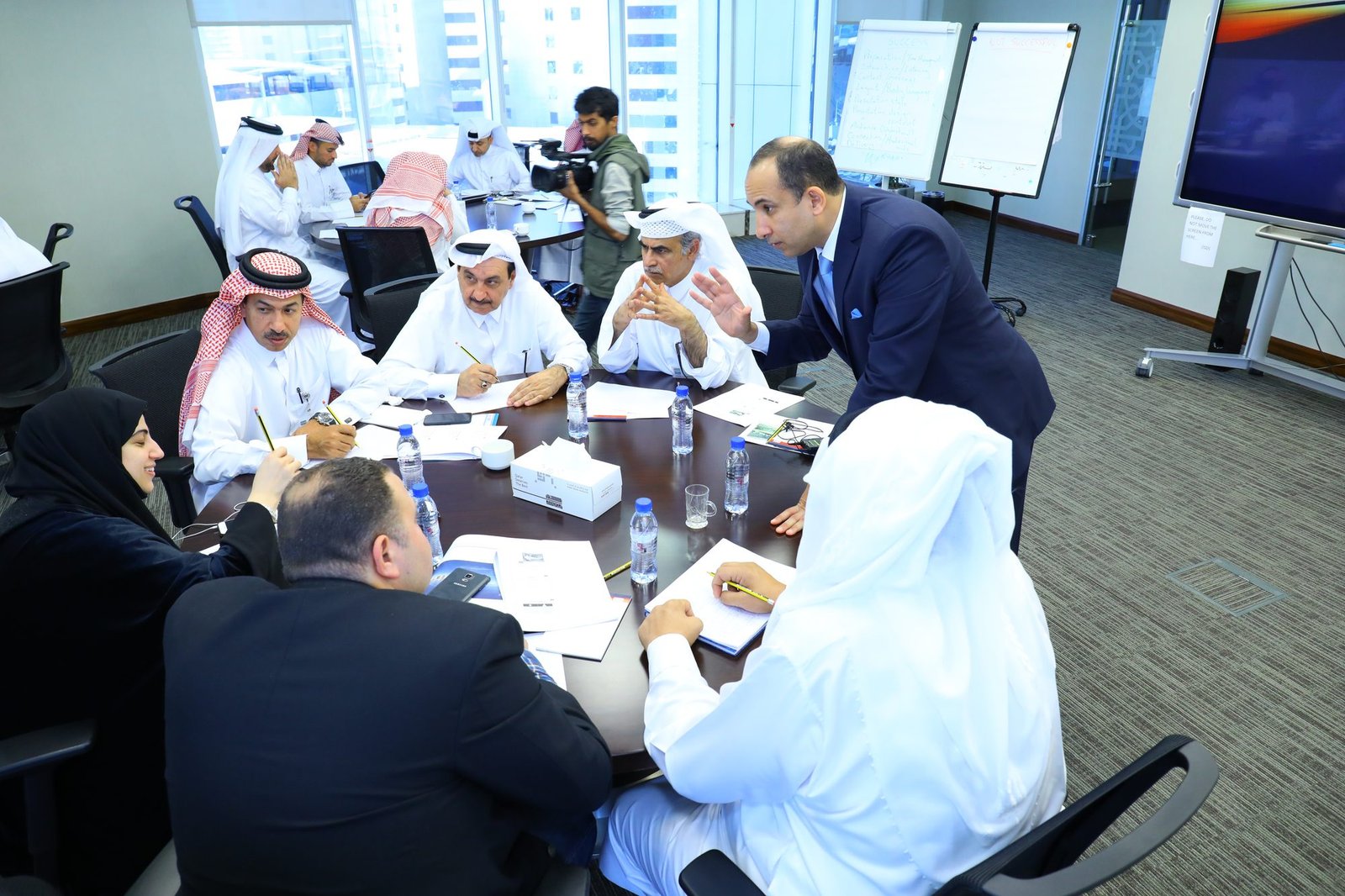 Workshop in session
Business Acumen for HR Professionals
Bridging the gap between HR metrics and business results, with a focus on Banking Sector Dynamics to contextualize HR within the financial value chain.
- Interpret key financial statements (P&L, Balance Sheet, Cash Flow).
- Understand the Banking Value Chain (Front, Middle, Back Office).
- Connect HR initiatives to bottom-line financial impact.
- Finance 101. Revenue, EBITDA, and Margin.
- Sector Focus. How Banks Make Money (Interest vs. Fee Income).
- Calculating Human Capital ROI.
- Case Study. Analyzing an Annual Report to Identify Talent Risks.
Organizational Network Analysis
Using data to visualize the “invisible” organization of relationships and flows.
- Identify influencers, brokers, and bottlenecks.
- Map collaboration patterns across silos.
- Use ONA insights for change management.
- The Formal Chart vs. The Informal Network.
- Key Roles. Hubs, Bridges, and Isolates.
- Collecting ONA Data. Passive vs. Active.
- Activity. Mapping Your Personal Professional Network.
Complex ER Issues & Investigations
A methodology-focused course on conducting fair, rigorous, and defensible workplace investigations.
- Structure an investigation plan.
- Conduct interviews using the PEACE model.
- Document evidence and write investigation reports.
- Triage. The Severity Matrix (What to investigate).
- The Investigation Lifecycle.
- Cognitive Interviewing Techniques.
- Simulation. The “He Said/She Said” Investigation Triage.
Change Management Facilitation
Equipping HR to lead the people side of transformations using proven frameworks.
- Assess organizational readiness for change.
- Apply ADKAR and Kotter’s 8 Steps.
- Manage resistance and identify change champions.
- The Psychology of Change (The Change Curve).
- Framework Deep Dive. ADKAR.
- Communication Planning for Change.
- Project. Drafting a Change Management Plan for a Tech Rollout.
People Analytics Foundations
The transition from operational reporting (what happened) to analytical insight (why it happened).
- Differentiate descriptive, diagnostic, predictive, and prescriptive analytics.
- Ensure data hygiene and governance.
- Formulate testable hypotheses for people problems.
- The Analytics Maturity Model.
- Data vs. Metrics vs. Analytics.
- Data Visualization Principles.
- Exercise. Calculating and Interpreting “Cost of Turnover.”
Predictive Turnover Modeling
Using statistical logic to identify who is likely to leave and why.
- Understand the variables that predict turnover (Tenure, Pay, Rating).
- Conceptually apply regression analysis to retention.
- Design intervention strategies for “High Risk” talent.
- The Cost of Turnover.
- Why They Leave. Push vs. Pull Factors.
- From Prediction to Prevention. Intervention Tactics.
- Case Study. Analyzing a Dataset to Find Attrition Drivers.
Skills-Based Talent Strategies
Preparing for the shift from “Jobs” to “Skills,” this course covers skills taxonomy, inferencing, and the internal talent marketplace.
- Deconstruct jobs into tasks and skills.
- Differentiate between durable skills (soft) and perishable skills (hard).
- Implement an Internal Talent Marketplace.
- The Death of the Job Description?
- Building a Common Language. The Taxonomy.
- Talent Marketplaces. Unlocking Internal Mobility.
- Application. Deconstructing a Role into a Skill Cluster.
Learning Analytics & ROI Measurement
Proving the value of L&D beyond “completion rates” to measuring behavior change and business impact.
- Apply Kirkpatrick’s 4 Levels of Evaluation.
- Calculate the ROI of training programs (Phillips Model).
- Isolate the effects of training from other variables.
- The “Chain of Impact” in Learning.
- Measuring Behavior Change (Level 3).
- Converting Impact to Monetary Value (Levels 4 & 5).
- Action Plan. Designing an Evaluation Strategy for a Leadership Program.
Recognition & Appreciation Programs
Designing total rewards components that drive intrinsic motivation and culture, moving beyond monetary bonuses.
- Design peer-to-peer and manager-led recognition programs.
- Balance monetary vs. social recognition.
- Ensure recognition is timely, specific, and authentic.
- The Economics of Gratitude.
- Designing a Total Recognition Strategy.
- Gamification in Recognition.
- Project. Designing a “Kudos” Program Framework.
Performance Conversations & Coaching
Shifting performance management from a backward-looking “judgment” process to a forward-looking “development” process.
- Transition from annual appraisals to continuous coaching.
- Set agile goals using OKRs (Objectives and Key Results).
- Facilitate calibration sessions to ensure fairness.
- The Death of the Annual Review?
- The Coaching Habit. Asking vs. Telling.
- Continuous Feedback Loops.
- Roleplay. The Development Check-In.
Inclusive Leadership Practices
Developing leadership behaviors that foster psychological safety and belonging.
- Understand the traits of inclusive leaders (Curiosity, Courage, Humility).
- Build psychological safety in teams.
- Leverage diversity for innovation.
- Diversity is a Fact; Inclusion is a Choice.
- The 6 Traits of Inclusive Leadership.
- Psychological Safety. The Foundation of Teamwork.
- Activity. Conducting a Personal Inclusion Audit.
Unconscious Bias & Mitigation
Moving beyond “awareness” to structural mitigation of bias in HR processes.
- Identify common biases (Affinity, Halo, Confirmation).
- Audit HR processes (Hiring, Promotion) for bias.
- Implement “Nudges” to interrupt biased decision-making.
- The Science of Bias (System 1 vs. System 2).
- Types of Bias in the Workplace.
- Structural Mitigation vs. Individual Awareness.
- Simulation. The “Blind Resume” Review Exercise.
Wellbeing Program Design & Metrics
Designing holistic wellbeing strategies that go beyond “wellness weeks” to sustainable work practices.
- Design across the 4 pillars: Physical, Mental, Financial, Social.
- Understand ISO 45003 (Psychosocial risks in the workplace).
- Measure the ROI and VOI (Value on Investment).
- From Wellness (Health) to Wellbeing (Thriving).
- Psychosocial Hazards. Workload, Autonomy, Support.
- Measuring Wellbeing Impact.
- Application. Auditing the Current Wellbeing Offering.