Levels follow the Kirkpatrick model. Each case states the highest level its evidence reaches.
Principle 1Confidential by defaultCompany, organiser and individual names are removed. We describe the organisation, not identify it.
Principle 2Measured, not estimatedNo invented ROI. A number appears only if it was measured, and we say where it came from.
Principle 3Evidence you can seeWhat participants built, and the record from the room.
A note on names. All company, organiser and individual names have been removed to protect client confidentiality. The simulated organisation in case 2 is fictional by design.
EnergyUAETraining · Executive masterclass2026
An international HR summit for the energy sector, Dubai
Senior HR leaders left with a first map of the roles their organisations cannot afford to lose.
Evidence level 2 · Learning
1 dayduration
On-siteformat
Senior HRand talent leaders
2026delivered
1
Context
Energy organisations are losing experienced specialists, expanding faster than their pipelines can supply talent, and using AI to inform people decisions. The organiser asked for a full-day masterclass on the decisions that protect critical capability: who holds the roles that cannot fail, who succeeds them, and where AI sharpens or weakens that judgement.
2
Intervention
A design built around decisions, not HR modules. The day opened with a live poll on where talent breaks first, to surface assumptions. Participants then worked through the Critical Role Radar (six criteria, four risk lenses and AI exposure) and an executive simulation in which they advised a leadership team using AI-generated analysis. Governance questions sat inside every activity, not in a closing session.
3
Evidence
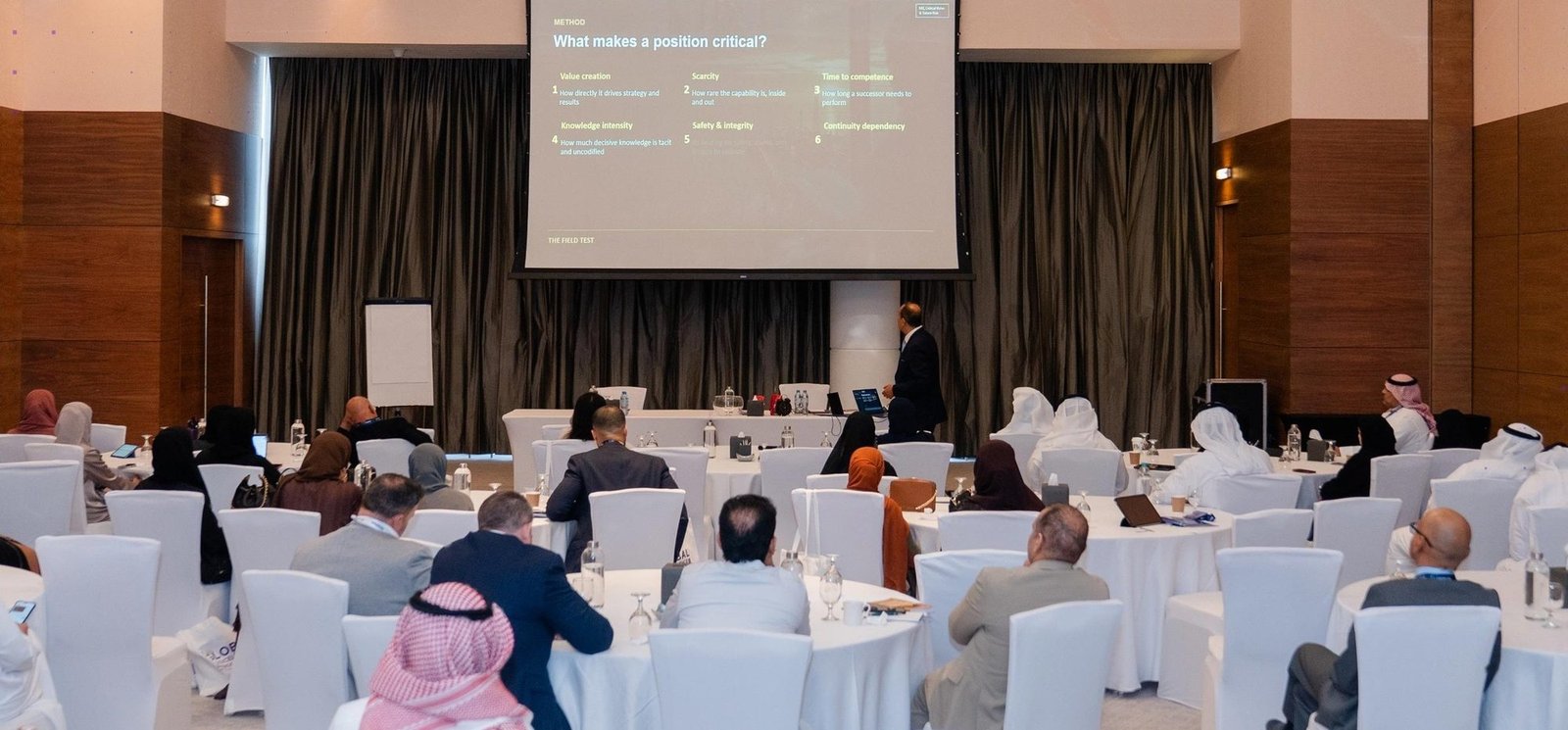
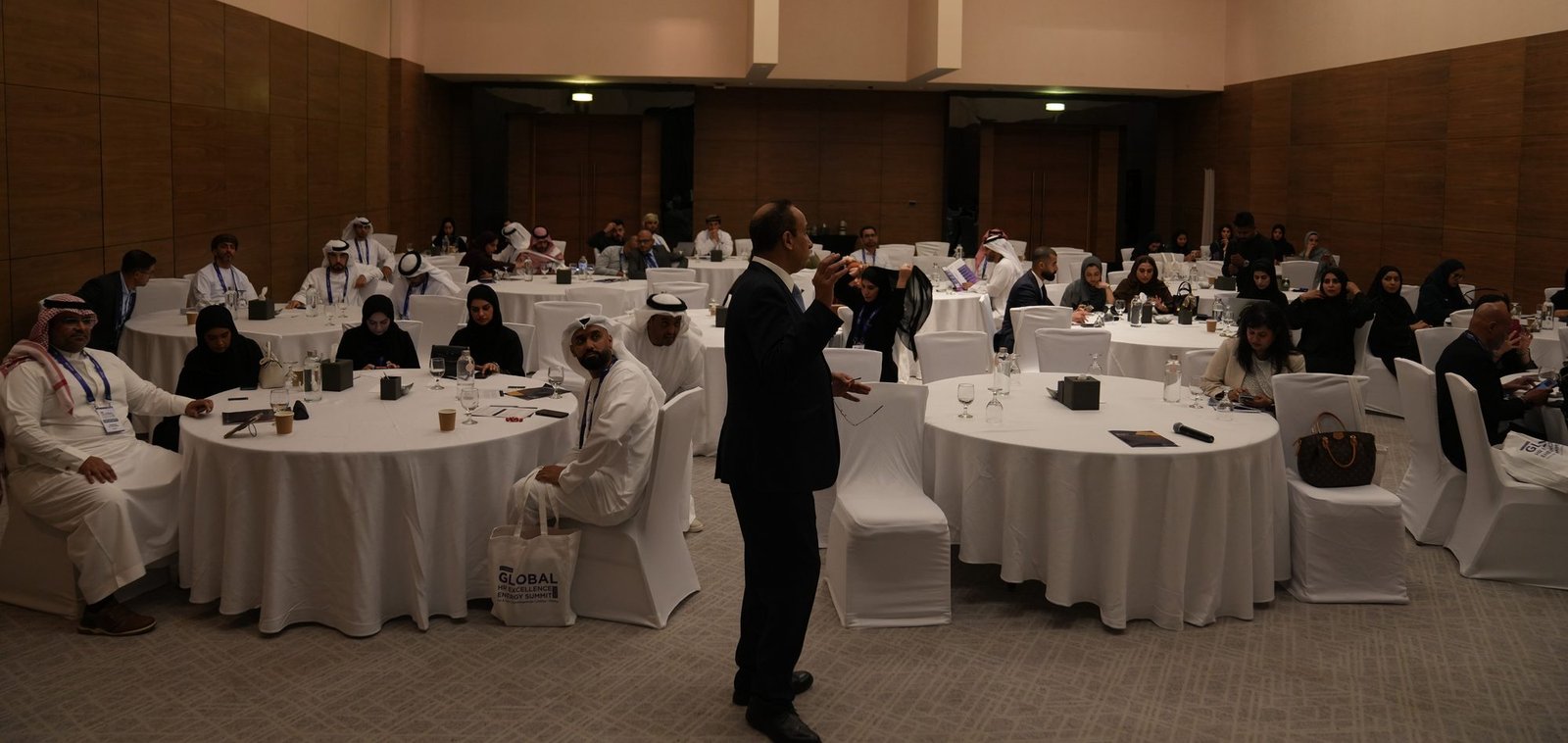
Every participant produced a first Critical Role Radar map for a role they know, and defended succession recommendations and escalation points in the executive case. They left with implementation toolkits, including a Decision and Action Log and a 9-Box guide tied to the calibration work. Photos and video from the room document the exercises.
What participants built
A first Critical Role Radar map: role criticality, risk of loss and AI exposure
Succession calls in an executive case, with escalation points they had to defend
A clear line between what AI recommends and what remains a named human decision
HR and line leaders built a working AI-enabled talent workflow and a 90-day plan they had already tested.
Evidence level 2 · Learning
15HR and line leaders
5 days9 modules
On-siteformat
2026delivered
1
Context
The group faced three pressures at once: experienced technical experts approaching retirement, expansion that demands capability faster than traditional pipelines can supply, and AI moving to the centre of talent decisions. It asked for a program that would give a mixed cohort of HR and line leaders the same working model for critical roles, succession and development.
2
Intervention
A five-day program designed for this cohort, preceded by a diagnostic in which each delegate selected the critical roles to work on. One simulation ran through the week: delegates advised the leadership team of a fictional energy group, and each day’s decisions fed the next, from a critical-position register and a calibrated talent review to succession, development and a capability operating model. Day 5 was a three-hour hands-on build.
3
Evidence
Each delegate built, stress-tested and governed a working AI-enabled talent workflow with no-code tools during the capstone, and left with a 90-day implementation plan tested against governance challenges, plus a toolkit of more than 40 implementation tools. The cumulative simulation outputs show the decisions the cohort made and defended across the week.
What delegates built
A critical-position register and talent risk view for their own organisation
A calibrated talent review, run from AI-drafted pre-reads with bias flags
A working AI-enabled talent workflow, governed and defended on Day 5
A 90-day implementation plan, pressure-tested before they left