
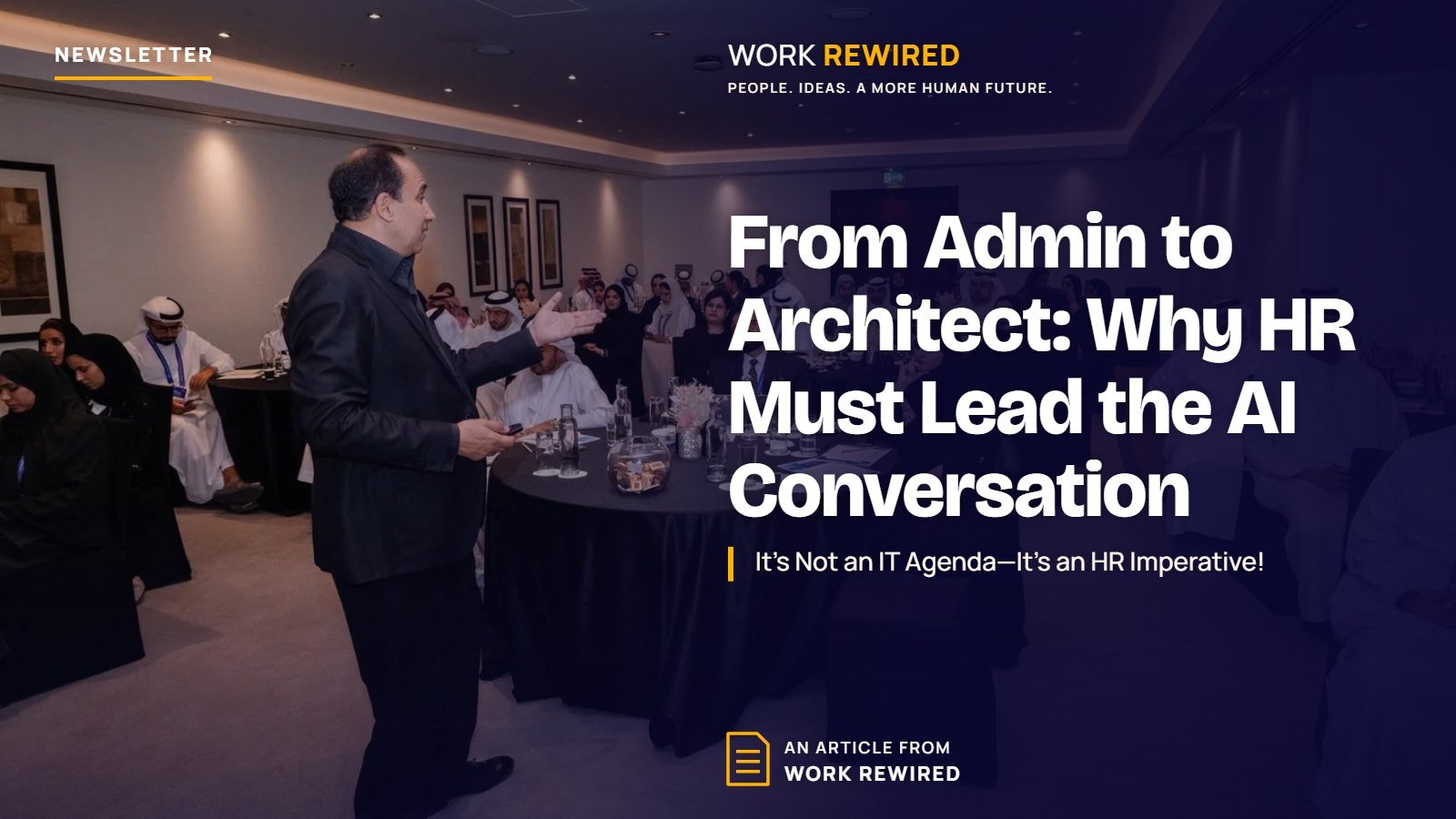
It’s Not an IT Agenda—It’s an HR Imperative!
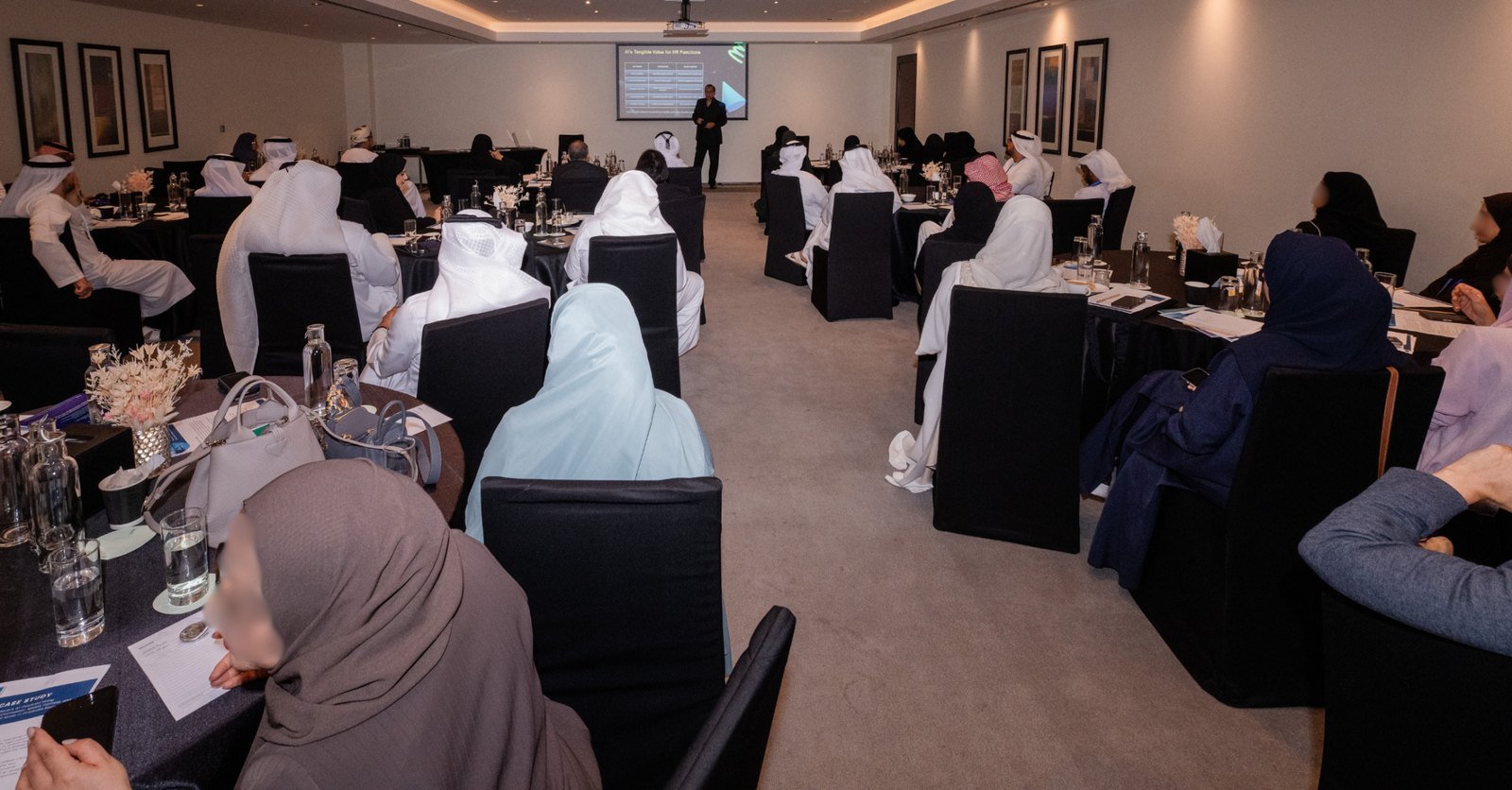
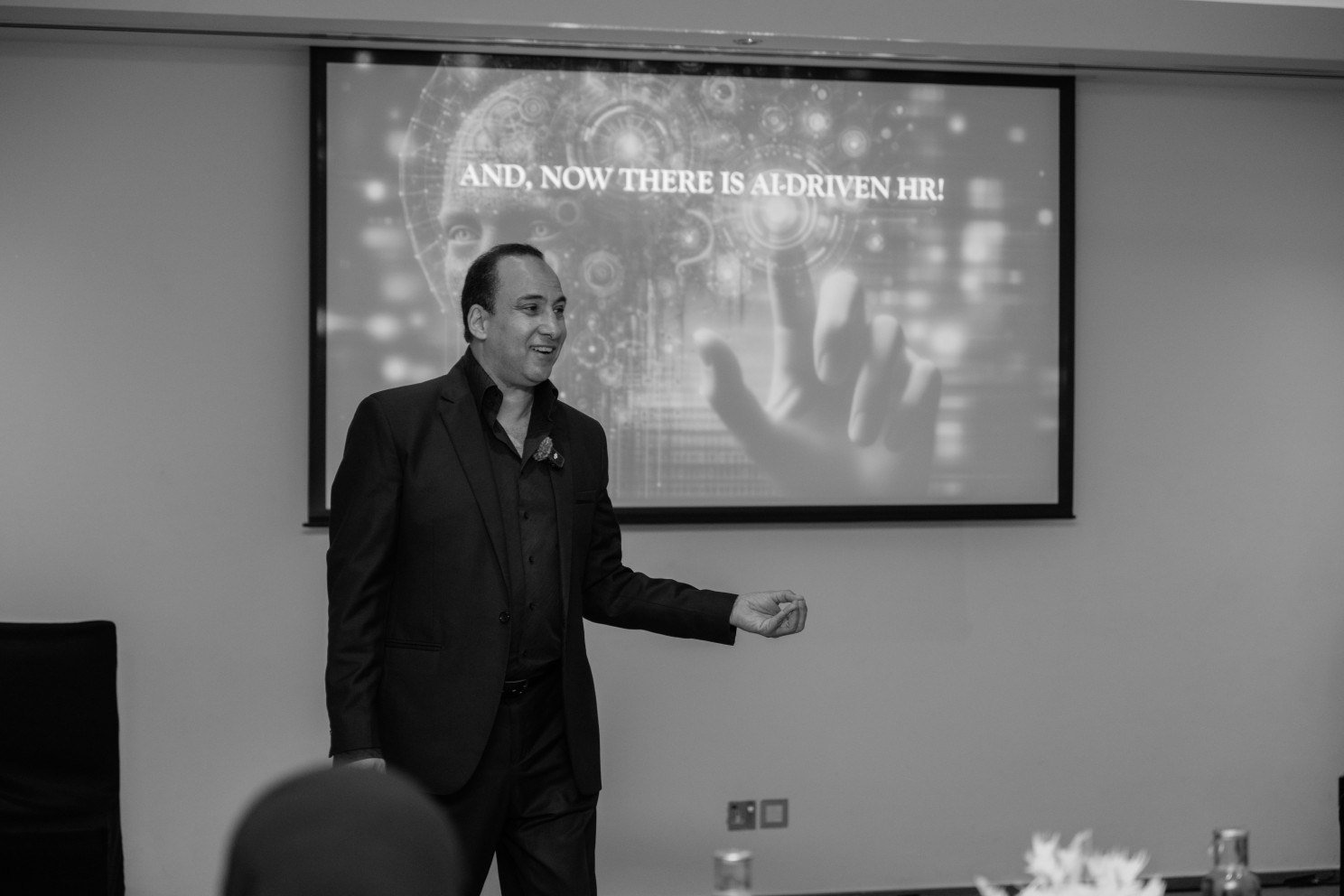
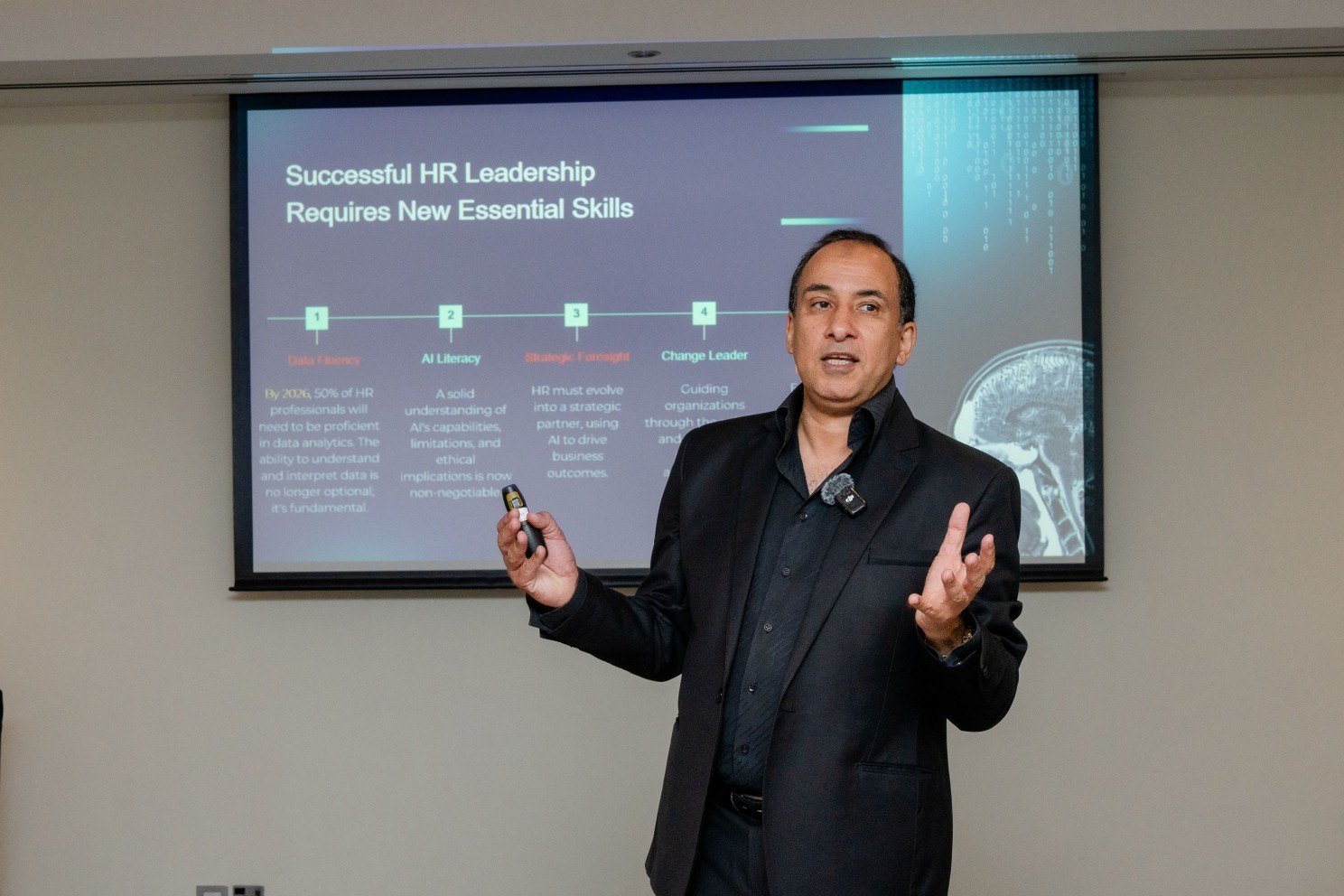
On May 1st, I had the privilege of delivering a masterclass at the 4th Global HR Excellence Energy Summit in Dubai. What began as a conversation about the practical uses of AI in HR quickly escalated into something much deeper—an urgent and spirited debate about who within the organization should own the AI transformation journey. The room was filled with brilliant HR leaders from across the GCC energy sector, and their message was resounding: HR must move beyond being AI adopters to becoming AI strategists. That workshop became the spark for this article.
Let’s be clear: AI’s primary impact is on people—their roles, performance, development, engagement, and ethical treatment. When the workforce is the locus of impact, HR must be the lens through which AI is interpreted, governed, and leveraged – not IT. The question is not whether HR has a role to play, but whether HR will lead or lag as AI redefines the workplace.
Agentic AI: A New Class of Workforce Transformer
As organizations contemplate the deployment of AI systems, from intelligent automation in operations to sophisticated analytical tools in marketing, the most significant effects are felt by the people. Job roles are being redefined, new skill sets are becoming essential, and the very nature of collaboration is shifting. We’re no longer discussing automation that trims the fat off routine tasks. The emergence of agentic AI—systems that can reason, plan, and execute autonomously—ushers in a paradigm shift. These agents don’t just respond; they initiate. They are capable of coordinating workflows, managing projects, analyzing real-time data, and adapting actions in pursuit of evolving goals. This is not about job displacement alone—it’s about redefining what work is, and what roles humans will now play in strategy, leadership, and decision-making.
This puts HR at the epicenter of some of the most complex and sensitive challenges organizations will face: redefining talent strategies, rearchitecting work structures, guiding cultural adaptation, and ensuring ethical governance.
HR’s Moment: From Operational Backbone to Strategic Orchestrator
For decades, HR has walked a tightrope between execution and influence. But agentic AI tips the balance. Consider strategic workforce planning. Traditionally, it’s reactive, episodic, and bound by fragmented systems. Now, imagine a persistent AI agent that continuously scans internal skills, benchmarks them against shifting industry demands, models workforce supply-demand dynamics, and recommends reskilling investments—before the talent gap becomes critical (Jones, 2023).
In this vision, HR professionals shift from data aggregators to curators of meaning. They no longer just pull reports—they vet machine-driven insights, evaluate ethical implications, and align AI recommendations with organizational values.
In recruitment, we’re already seeing systems that automate the entire candidate pipeline—sourcing, outreach, scheduling, initial assessment, and even shortlisting, all powered by contextual understanding and behavioral data. But again, the strategic oversight remains human: defining the hiring philosophy, ensuring inclusivity, and shaping the narrative that attracts top talent.
A Spectrum of AI Collaboration: The Evolution Has Begun
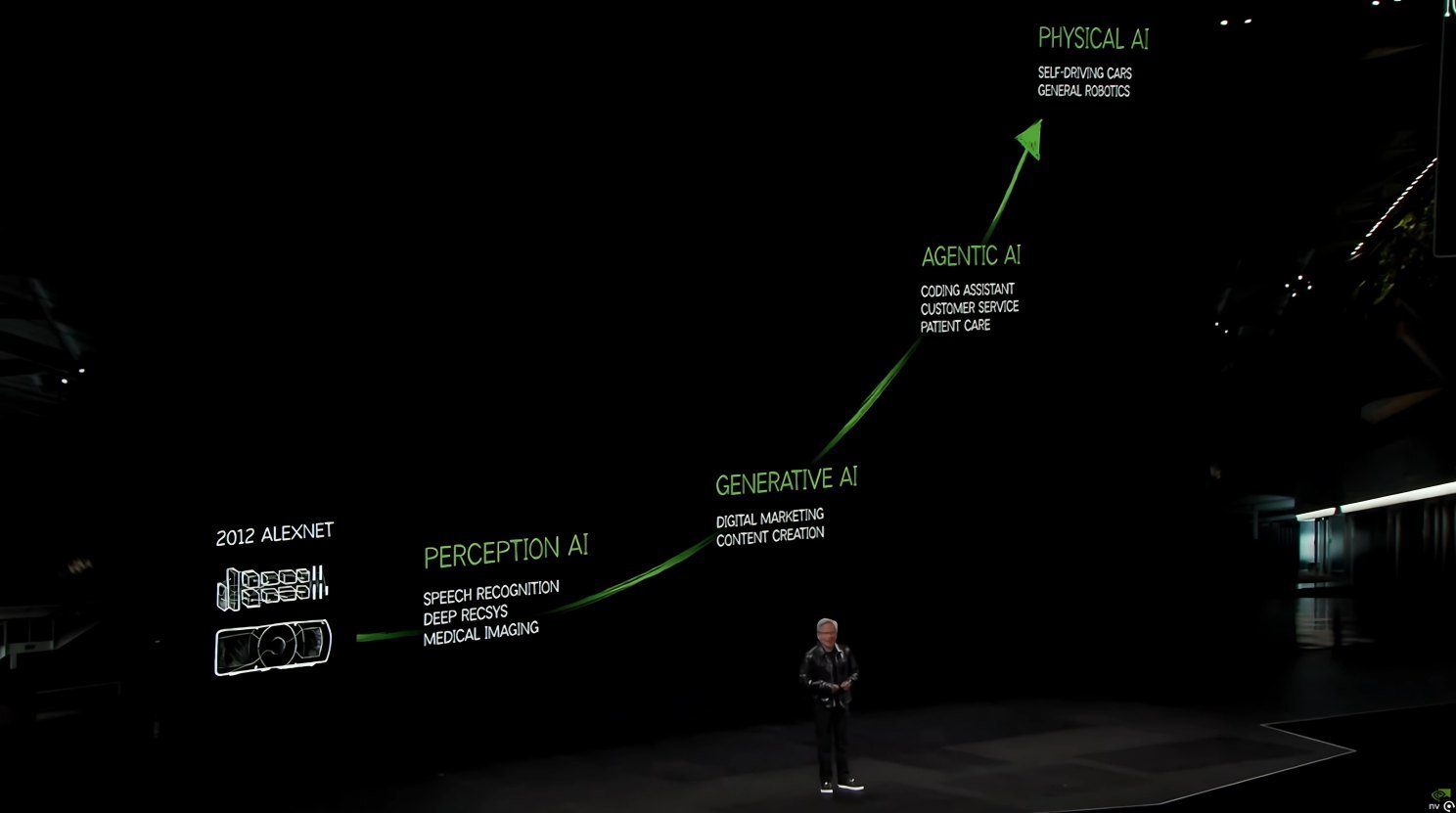
HR must understand where we are—and where we’re heading—on the AI spectrum:
- Transactional Tools: Rule-based bots handling FAQs or policy lookups.
- Contextual Assistants: LLM-integrated apps (e.g., Copilot) helping draft emails or summarize meetings.
- Proactive Analysts: AI spotting risks—like compliance gaps—and recommending corrective actions (Visier).
- Adaptive Co-Strategists: Tools that adjust hiring or pay structures based on ongoing feedback loops (Workday; Payscale).
- Autonomous Workforce Architects: Not yet mainstream, but already prototyped—AI managing L&D portfolios or team structures for optimal strategic alignment (Sutton & Barto, 2018).
Understanding this trajectory is essential. As the agent evolves, the nature of human involvement must also evolve—from oversight, to co-creation, to orchestration.
HR Capabilities for an AI-Driven Era
For HR to lead, new capabilities must become second nature:
- Strategic Framing for AI: HR leaders must define not just what outcomes AI should support, but why—and how those outcomes align with human-centered goals.
- Intelligent Oversight: HR must develop the capacity to audit AI decisions, identify bias, and assess decision quality using both data and judgment (Floridi & Taddeo, 2016).
- Ethical AI Governance: Policy frameworks and operating guidelines must come from HR—covering fairness, privacy, transparency, and explainability.
- Hybrid Process Design: Human-AI interaction isn’t a bolt-on; it’s a redesign. HR should lead the design of workflows where humans and machines each play to their strengths.
- Anticipatory Strategy: AI can detect early signals—shifting skill demands, burnout indicators, engagement declines. HR must turn those insights into action before risk becomes impact.
Rewiring the HR Operating Model

We cannot graft AI onto rigid, process-heavy HR models. It’s time to architect new ones. Drawing on Gulati’s insights (2022), effective AI integration demands organizational structures that enable speed, cross-functionality, and empowered decision-making. For HR, this means:
- Fluid Resourcing: Budgets and headcount must follow priorities, not preset allocations.
- Decentralized Decisions: Push decision rights closer to those with the most context—including AI agents operating under clear ethical guardrails.
- Unified Data Ecosystems: HR must drive efforts to break down data silos so AI has the input diversity it needs to deliver meaningful insights.
- Adaptive Governance: Shift from static policies to modular, principle-based frameworks that allow for AI flexibility while upholding organizational values.
This is more than a tech upgrade—it’s a functional transformation.
Real Signals from the Market: Agentic AI in Action
- Eightfold AI is delivering career mobility at scale through skill-based talent intelligence, matching employees to roles, learning opportunities, and mentors in real time (Eightfold AI).
- Perceptyx uses employee feedback and natural language processing to surface cultural trends before they become retention risks. The next frontier? Agents that recommend—and even initiate—tailored interventions (Perceptyx).
- LegalTech platforms are now autonomously scanning policies for compliance violations as laws change, enabling HR to act before risk materializes (Legaltech Association, 2023).
These aren’t theoretical. They are early chapters of a playbook in which HR must write the next act.
HR’s Strategic Imperative: Lead, Don’t Trail

Too often, technology strategy is viewed as IT’s domain. But when the most profound effects of AI land squarely on the workforce, HR has not only a stake—but a responsibility—to lead. Agentic AI is not merely a new toolset. It challenges how we define work, value human contribution, and architect purpose-driven organizations.
Leadership at this juncture demands vision. It requires HR to claim its seat—not just at the implementation table, but at the strategy table where AI’s role in shaping the future of work is decided.
AI’s knock on the door is clear; it’s time for HR to open it wide and lead the way!
References
- Eightfold AI. Talent Intelligence Platform. https://eightfold.ai/
- Floridi, L., & Taddeo, M. (2016). What is data ethics? Philosophical Transactions of the Royal Society A, 374(2083), 20160360. https://doi.org/10.1098/rsta.2016.0360
- Gulati, R. (2022). Deep Purpose: The Heart and Soul of High-Performance Companies. Harper Business.
- Jones, S. (2023, October 12). The next wave of AI in workforce analytics. HR Technology Analyst Insights.
- Legaltech Association. (2023). AI Trends in Compliance Report 2023.
- Payscale. Compensation Software & Data. https://www.payscale.com/
- Perceptyx. People Insights Platform. https://www.perceptyx.com/
- Visier Inc. People Analytics Platform. https://www.visier.com/
- Workday, Inc. Human Capital Management. https://www.workday.com/en-us/products/human-capital-management/overview.html
First published on LinkedIn.