
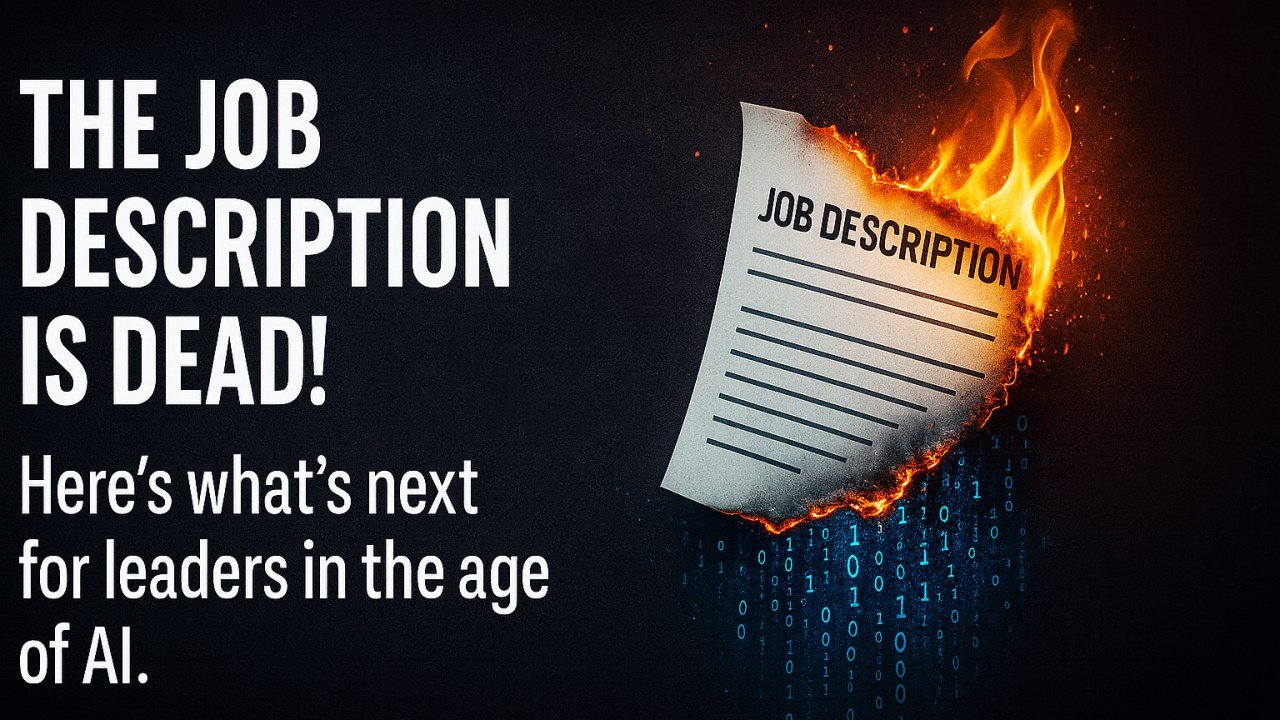
Redesigning work for an AI-shaped world where work is no longer defined by titles, but by the value we create.
The Job Description is Dead. What Comes Next?
For decades, I wrote, audited, and redesigned thousands of job descriptions. They once brought order to organizations, clarifying accountability, responsibilities, and pay. In a world of stability, they worked.
That world no longer exists! Artificial intelligence is not simply another tool. It is dismantling and reassembling the very fabric of work. Across boardrooms in Paris, Dubai, and Singapore, I see the same reality: the static “role” is becoming a relic. Work is no longer organized by positions to be filled, but by problems to be solved.
The traditional trio of Job Analysis, Description, and Evaluation was designed for continuity. Today, both continuity and predictability are gone. AI changes the scope, pace, and shape of work too fast for these methods to keep up. Our task as HR leaders is no longer to maintain the past but to architect the future.
The Disruption We Can No Longer Ignore
We have all have seen roles dissolve in real time. In financial services, AI-driven underwriting eliminated the need for loan processing officers in under two years. In logistics, AI scheduling tools shifted dispatch work from human clerks to algorithms almost overnight. In these cases, the jobs didn’t “evolve.” They simply evaporated!
Research backs this up. MIT Sloan Management Review (2023) found that in companies deploying AI, over 50 percent of tasks within a given role change in a single year. That makes a job description outdated almost the moment it is signed.
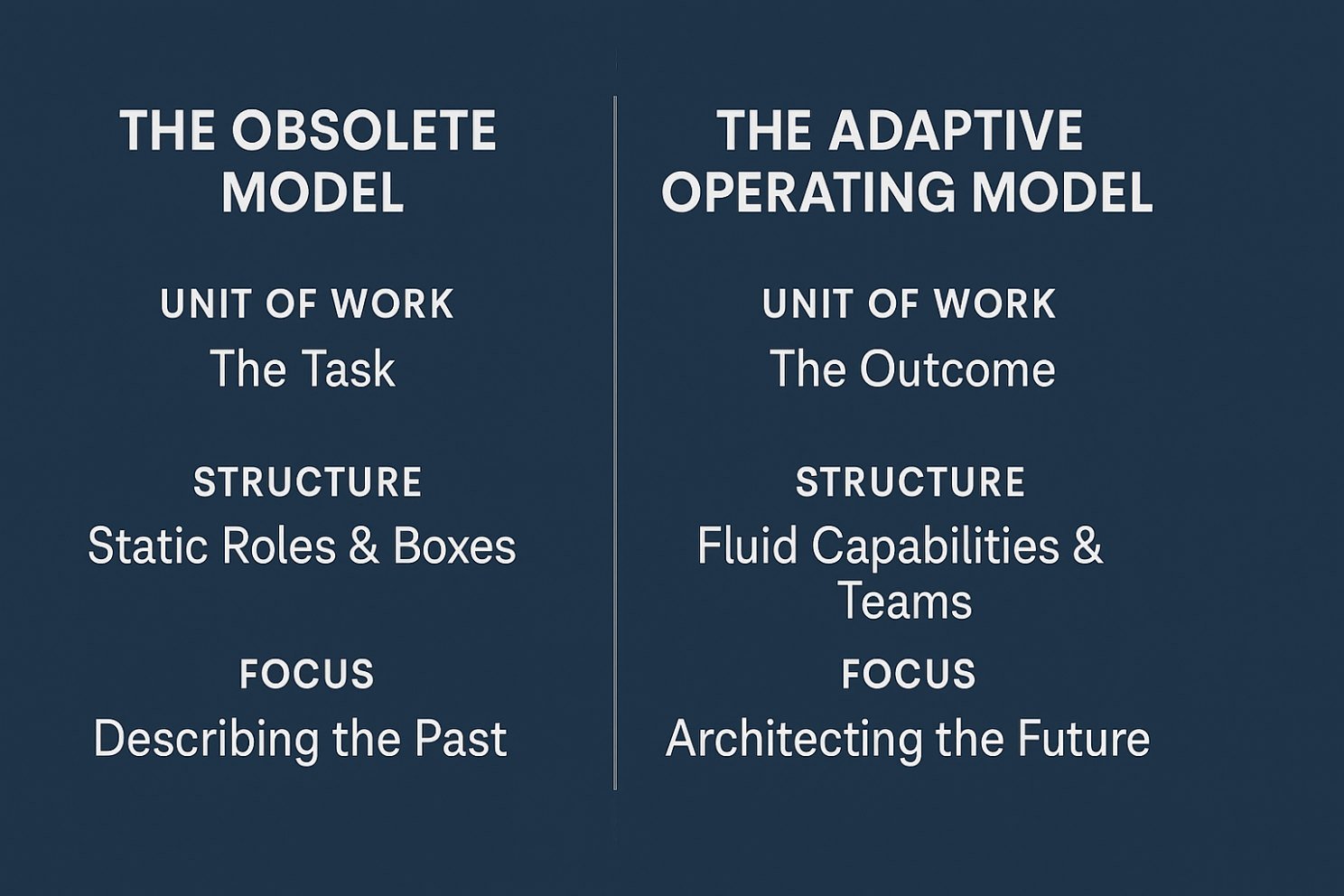
Traditional job descriptions capture the past. They build rigid boxes around talent instead of enabling the flow of work. The world has moved on. Our HR practices must as well.
From Roles to Systems: A New Operating Model
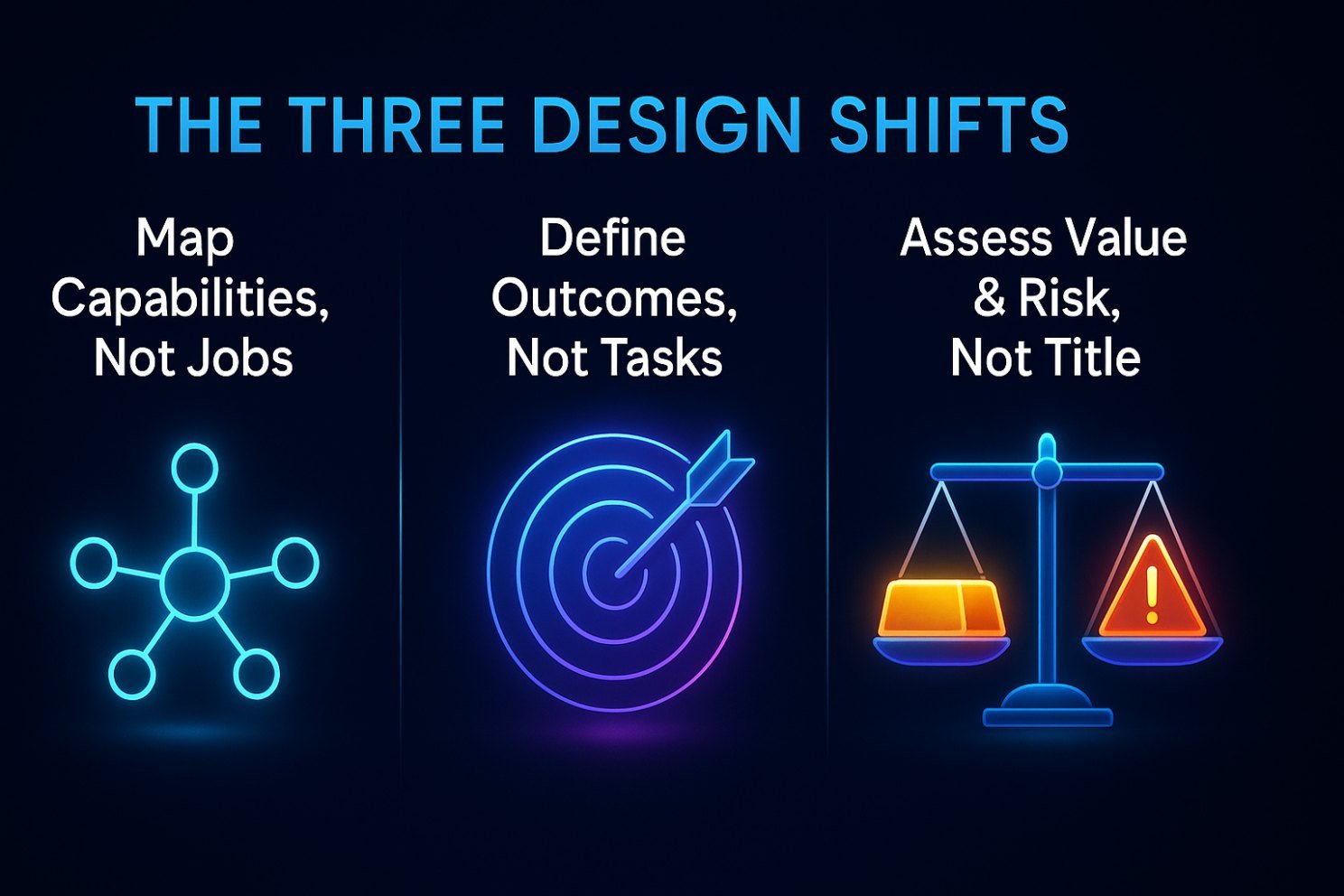
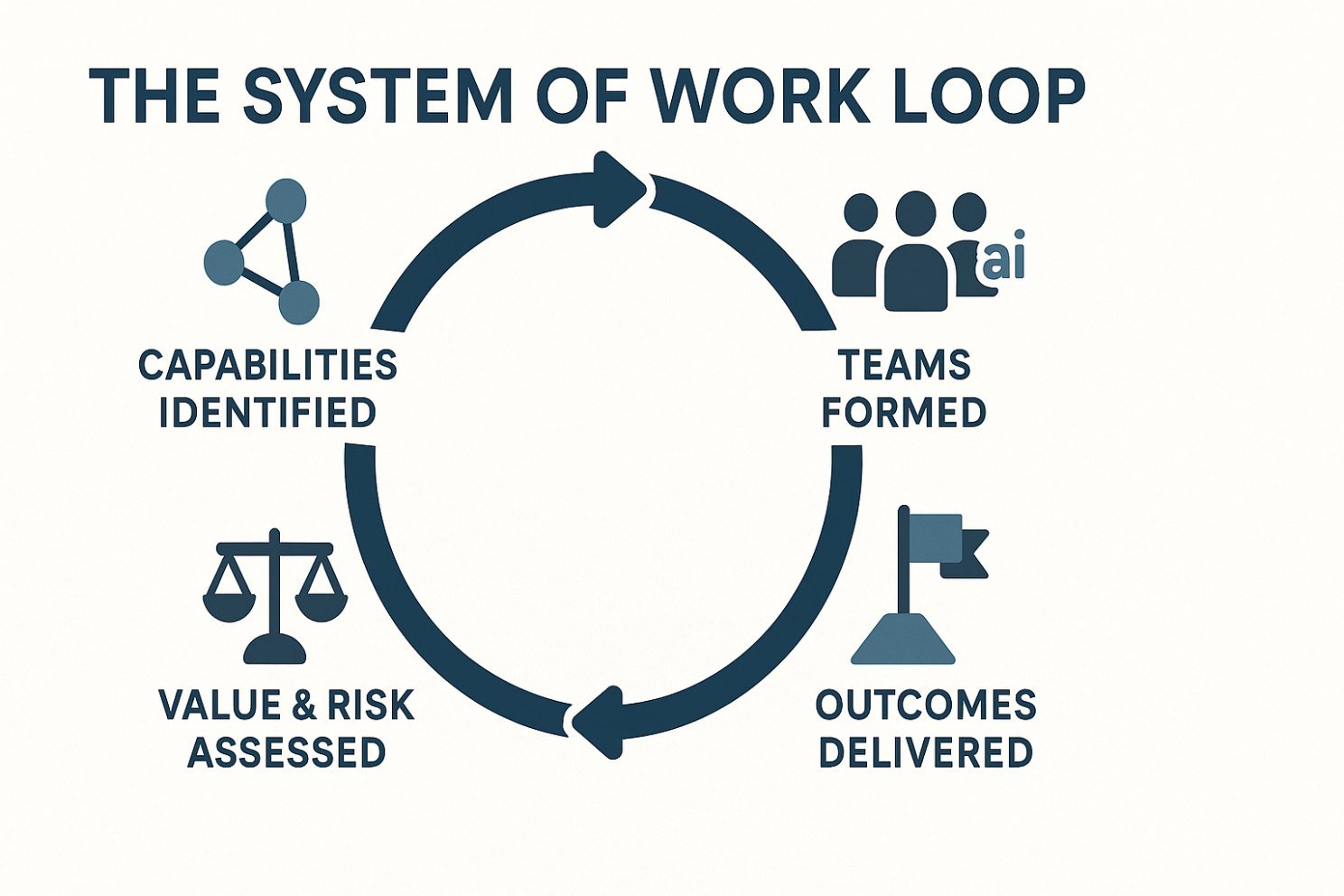
In my global advisory work, I have seen organizations thrive when they stop treating jobs as containers and start treating them as systems. To succeed, leaders must embrace the following three design shifts:
1. Map Capabilities, Not Jobs
Roles are fixed. Capabilities are fluid.
Instead of hiring a “Digital Marketing Manager,” forward-looking companies build a cloud of capabilities like data-driven audience insight, multi-channel narrative design, and ethical algorithm stewardship. Teams are then assembled dynamically from this capability pool.
A consumer goods firm I advised restructured its product launch teams this way. Rather than staffing by title, it mapped capabilities across engineering, analytics, and market influence. A launch might combine someone with “cross-functional sense making” to bridge engineering and marketing, another with “AI-assisted predictive analytics” to forecast adoption, and a third with “stakeholder influence” to secure executive buy-in. The result was a faster launch cycle and measurable improvements in adoption.
The World Economic Forum (2024) reports that companies adopting skills-based models see 35 percent higher retention of top performers because talent flows to where the work matters most.
2. Define Outcomes, Not Tasks
The currency of work is shifting from tasks to outcomes.
Static job descriptions dictate what must be done. Outcome agreements/charters define what must be achieved. They specify intent, measurable value, ethical guardrails, and available resources, including AI tools. They give teams freedom to blend human and machine intelligence to deliver results.
At one multinational, I worked with the transformation office to move from task lists to outcome charters. Instead of “reporting project milestones,” the charter required “delivering transparent, real-time visibility into project risks.” Managers quickly automated milestone updates through AI dashboards, freeing them to focus on mitigation — the true driver of value.
In a global bank, we replaced “Credit Analyst” job descriptions with charters such as “decide on small business loans within 48 hours.” The charter was refreshed quarterly as AI models evolved, creating clarity for employees and transparency for regulators.
3. Assess Value and Risk, Not Title
Traditional job evaluation ranks roles by budget size or span of control. In fluid systems, those measures lose meaning. What matters is the value of outcomes delivered — and the risks carried in delivering them.
In a global retailer, compensation frameworks were updated not only for value created but also for the risk carried when overseeing AI models. A Fraud Prevention Lead wasn’t just managing staff; they were safeguarding systems that processed millions of transactions daily.
Forward-thinking organizations measure the complexity of the challenge solved, the scope of the impact, and the degree of human oversight required in calibrating AI. This creates a meritocracy of outcomes, rewarding contribution in the moment rather than hierarchy on paper.
A Practical Agenda for Leaders
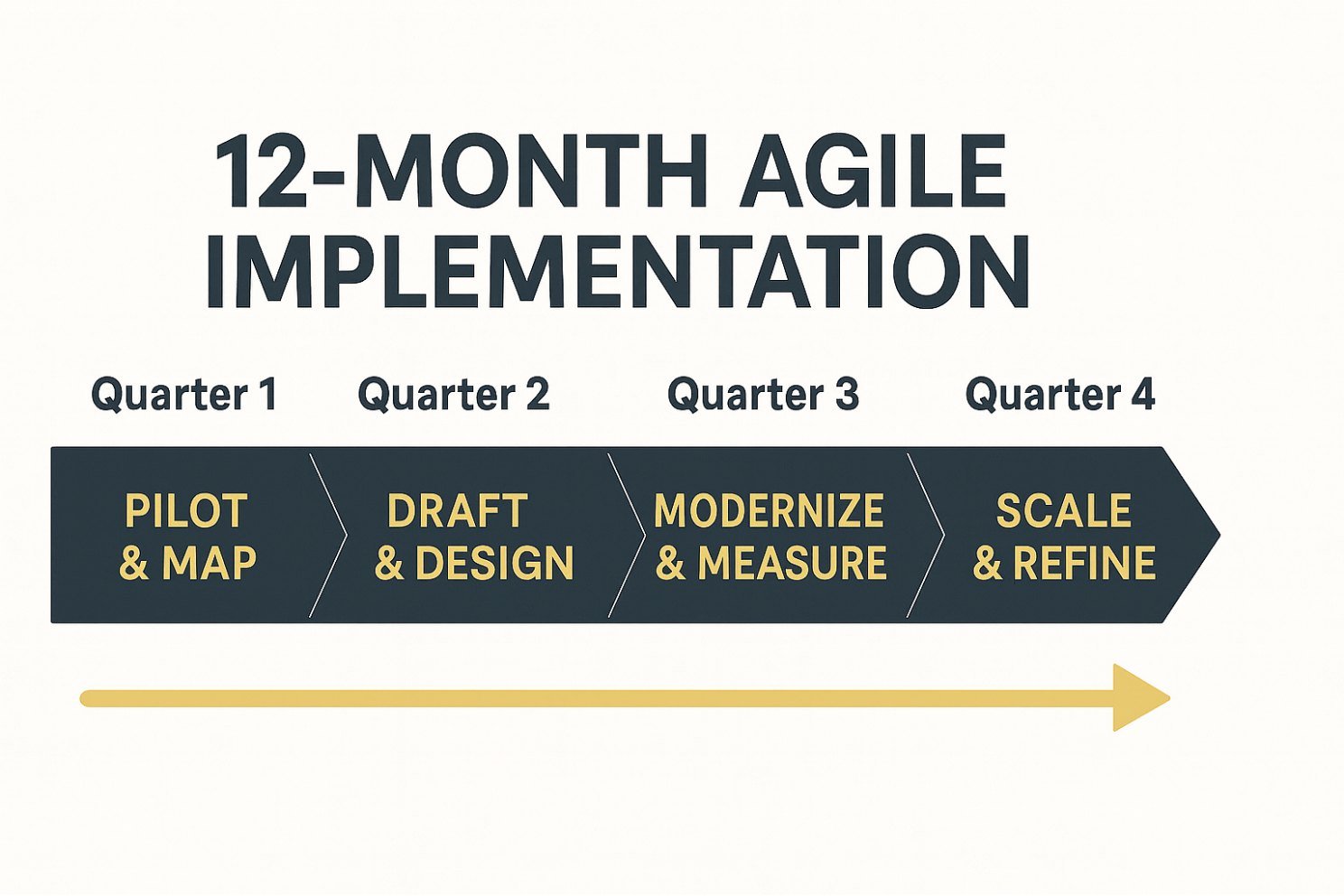
This shift is already underway. The leaders who act now will be the ones shaping its trajectory. Four steps can set the foundation:
- Pilot a capability map – Select one department and chart it as a web of core capabilities instead of roles.
- Draft Outcome Charters – Redefine work briefs around results, not duties. Test with a cross-functional project.
- Update evaluation frameworks – Measure value by complexity, impact, and oversight rather than title or tenure.
- Invest in visibility – Use Organizational Network Analysis (ONA) to reveal how work really flows, beyond the org chart.
The Final Mandate
After three decades of advising global organizations, my conclusion is clear. We are moving from a paradigm of jobs to a paradigm of work. The winners will not be those with the most polished job descriptions. They will be those with the most adaptive operating systems.
This is not simply an HR adjustment. It is a re-architecture of how value is created.
The question for every executive is no longer: How do we update our job library? It is: How do we build a living system that evolves as fast as the world around us?
And as AI systems begin to act not only as tools but as autonomous agents, even Outcome Charters may need to evolve into dynamic contracts negotiated between humans and machines.
Our legacy will not be the roles we documented. It will be the work we enabled.
Food for Thought
✓ Where in your organization is the disconnect between formal job titles and actual work most obvious?
✓ If you eliminated job titles for your leadership team for one quarter, how would you reallocate their time and capabilities to maximize strategic impact?
✓ What single institutional barrier most prevents a more fluid, capability-based model of work?
✓ Which pilot project offers the best return for testing an Outcome Agreement/Charter?
References
- MIT Sloan Management Review. (2023). The Workforce Ecosystem and AI: Strategies for Coordination and Leadership.
- Boston Consulting Group. (2023). AI at Work: What People Are Saying.
- World Economic Forum. (2024). Future of Jobs Report.
- Gartner. (2023). HR Leaders’ Guide to Job and Role Redesign in the Age of AI.
- Deloitte Insights. (2024). The Symbiotic Enterprise: A New Model for AI-Human Collaboration.
- PwC. (2023). AI Predictions 2023: The Productivity Paradox.
- Harvard Business Review. (2023). The New Logic of Employee Compensation.
First published on LinkedIn.