
The Workshop Itself Is Not the Product!
If executive learning is meant to change what leaders do, why do we still design so much of it around what they need to know?
Executive education has spent decades refining the art of knowledge transfer. We build presentations, develop frameworks, assemble case studies, invite subject matter experts, and measure whether participants enjoyed the experience. We then assume that learning has taken place.
But knowledge transfer and learning are not the same thing!
For senior leaders, the distinction matters. Their problem is rarely a lack of information. What they do not have is certainty. They have to make consequential decisions with incomplete information, competing priorities, changing circumstances, and very little time. The consequences of getting those decisions wrong can be significant.
That leads to a different question for anyone designing executive learning: If the real objective is better leadership, should we be designing learning around what executives need to know, or around the decisions they need to become better at making?
That question shaped the design of my full-day executive masterclass, “AI-Driven Talent Management, Succession, and Executive Decision-Making,” delivered at the Global HR Excellence Energy Summit 2026, organized by Exxocon Global. The workshop was ostensibly about talent management, succession, executive decision-making, and AI. At a deeper level, however, it was an exercise in something broader: how to design an executive learning experience that moves participants from understanding concepts to exercising judgement.
The distinction is important because the workshop was never intended to be a collection of HR modules. Its architecture followed the logic of the decisions leaders actually face: understanding business strategy, identifying the capabilities required to deliver it, determining which roles and capabilities are most critical, assessing talent risk, evaluating potential and readiness, building succession and knowledge continuity, strengthening development and retention, and then considering where AI can strengthen the quality of those decisions.
The content therefore had to serve the learning journey, rather than the other way around.
Start with a question that creates a problem
The workshop did not begin by explaining talent management. It began with a challenge: Where does talent break first?
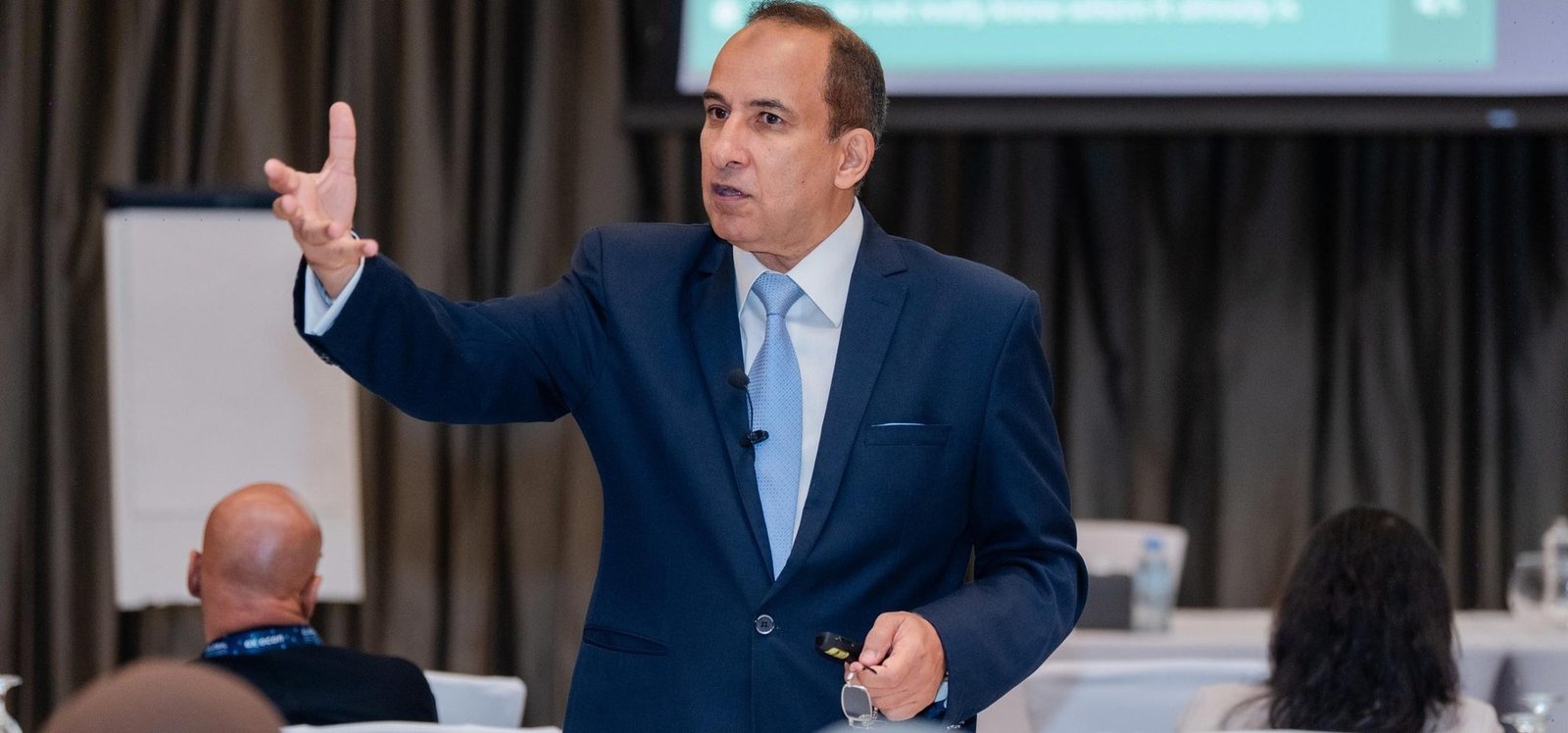
Participants were asked to respond through a live Kahoot exercise, considering questions around critical roles, bench strength, AI influence, retention, and organizational exposure. The purpose was not to test whether participants knew the “right” answer. It was to make their existing assumptions visible before introducing the frameworks and evidence that would challenge them.
This is a small design decision with a significant implication.
When learning begins with an explanation, participants can agree with the facilitator without ever confronting their own mental models. When it begins with a decision, however, participants have to reveal what they currently believe. The subsequent content then has a purpose: it either strengthens, modifies, or contradicts that initial judgement.
That creates a much more productive learning dynamic. The facilitator is no longer simply delivering information. The facilitator is creating a sequence in which participants repeatedly have to reconsider what they think they know.
Design the learning journey around the problem, not the presentation
The same principle shaped what followed.
The workshop moved from strategy to organizational capability, from capability to critical positions and talent risk, and from risk to assessment, succession, knowledge continuity, development, mobility, retention, and governance. The individual components were connected deliberately because the organization does not experience these issues as separate HR processes. A critical role creates one set of questions; the absence of a ready successor creates another; concentrated knowledge creates another; AI exposure introduces another layer of risk.
This is why I believe executive learning should be designed more like a system than a syllabus. A syllabus asks, What do we need to cover? A learning system asks, What do participants need to be able to think through by the end, and what sequence of experiences will enable them to do that? That is a different starting point.
It also changes the role of the facilitator. Instead of trying to make every slide interesting, the facilitator becomes responsible for creating the conditions in which participants have to think, decide, defend, reconsider, and apply. The slides become infrastructure.
The learning happens in the decisions.
Make the participant produce evidence of learning
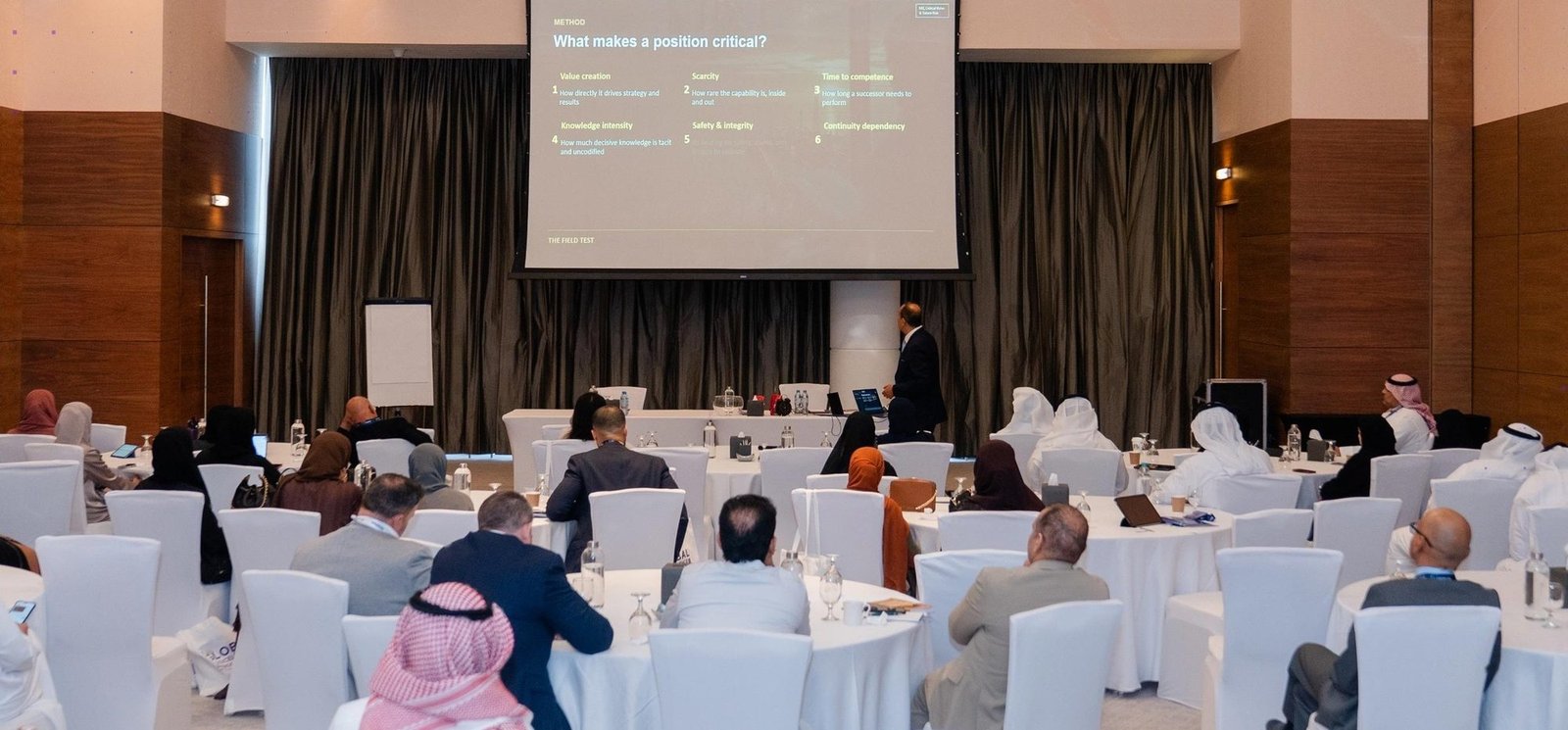
One of the practical exercises was the Critical Role Radar.
Participants did not simply hear an explanation of critical roles and talent risk. They selected a role they knew, scored it against six criteria, assessed its exposure through four risk lenses, considered the AI exposure, and positioned it on a radar according to the impact and likelihood of loss. The intended output was their first Critical Role Radar Map, or Talent and Capability Portfolio Map.
That distinction between understanding a tool and using a tool is central to effective executive learning.
A participant can leave a classroom able to explain a framework perfectly and still have no idea how to apply it when faced with an ambiguous organizational situation. The more demanding test is whether they can use the framework to make a judgement about something that matters.
That is why practical outputs matter.
They force participants to confront the quality of their own evidence. They expose gaps in information. They make assumptions visible. They create something that can be taken back into the organization rather than left behind in the classroom.
The learning artifact is therefore not merely a handout. It is evidence that thinking has taken place.
Then make the problem harder
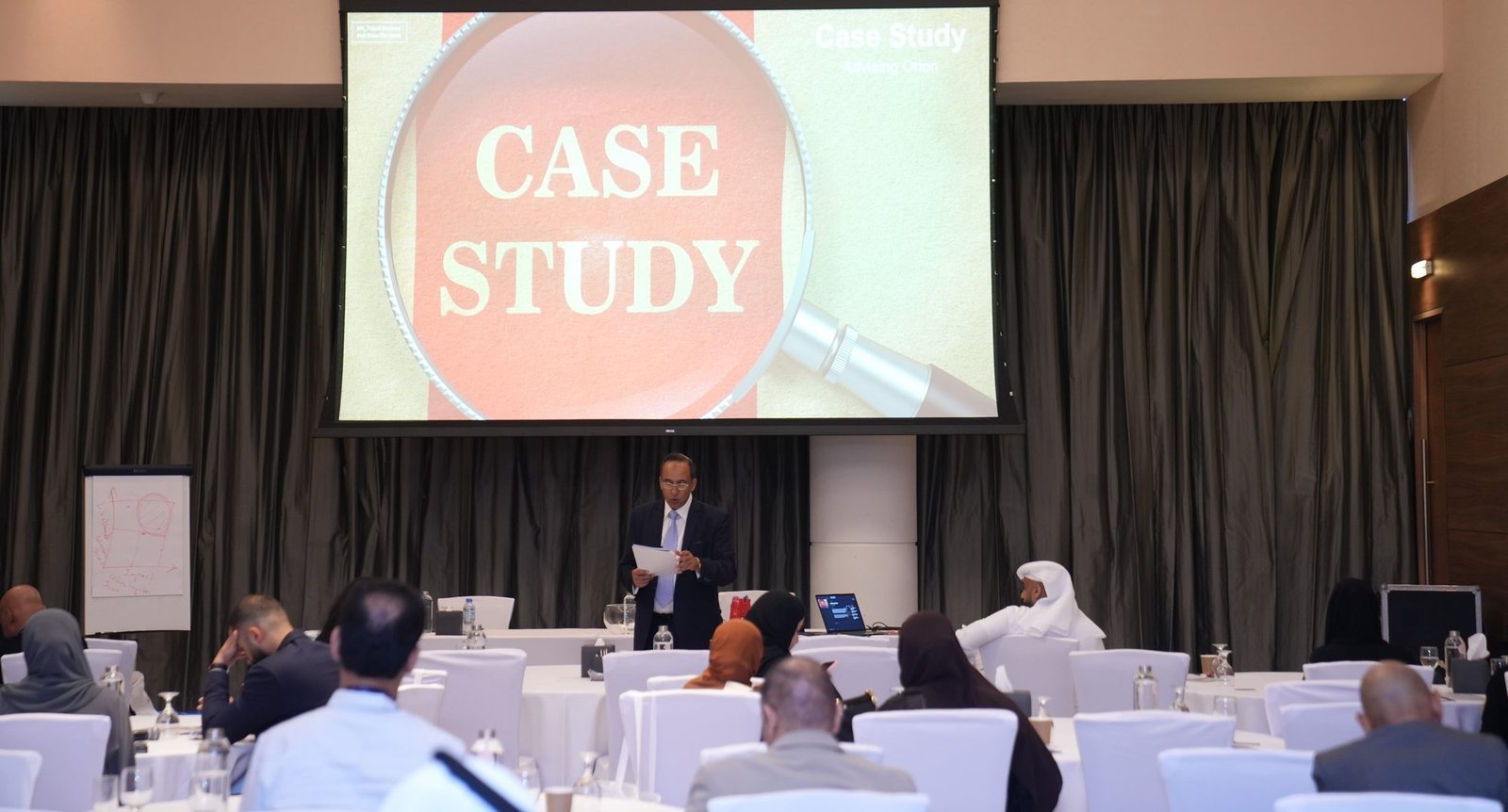
The executive case study/simulation was designed to introduce another level of difficulty.
Participants were placed in the position of advising an executive leadership team. They had to work with critical positions, candidate information, AI-generated analysis, readiness questions, development decisions, and escalation points. The instruction was not simply to review the information. It was to challenge the recommendations, make decisions, defend those decisions, and identify what needed to happen next.
This is where case-based learning can become genuinely powerful. A weak case asks participants to find the answer the author has already decided is correct. A stronger case/simulation forces them to decide what they would do when reasonable people could disagree.
The executive exercise was designed around the latter.
Participants had to determine whether the evidence justified the recommendation, whether the candidate was genuinely ready, what development was required, and where the risks needed to be escalated. The exercise deliberately placed AI-generated recommendations inside a human decision process rather than allowing the technology to become the decision maker. That distinction is particularly important now.
Do not teach AI as a separate subject
AI was therefore not positioned as the star of the workshop. It was positioned as a component of a larger decision system.
The workshop’s rule was explicit: algorithms inform potential decisions; they never make them. AI can widen the evidence base, infer skills from work history, identify patterns that might otherwise be missed, and compare a talent slate against available evidence. At the same time, it can reproduce visibility bias, amplify weaknesses in the underlying data, and create a false sense of objectivity.
That creates an important learning design opportunity. Instead of teaching participants how to use AI and then adding a final session on ethics, we can make the ethical and governance questions part of the activity itself.
- Who is accountable?
- What evidence is being used?
- What is missing?
- What might the model be unable to see?
- What assumptions are embedded in the analysis?
- What should the AI recommend, and what should remain a human judgement?
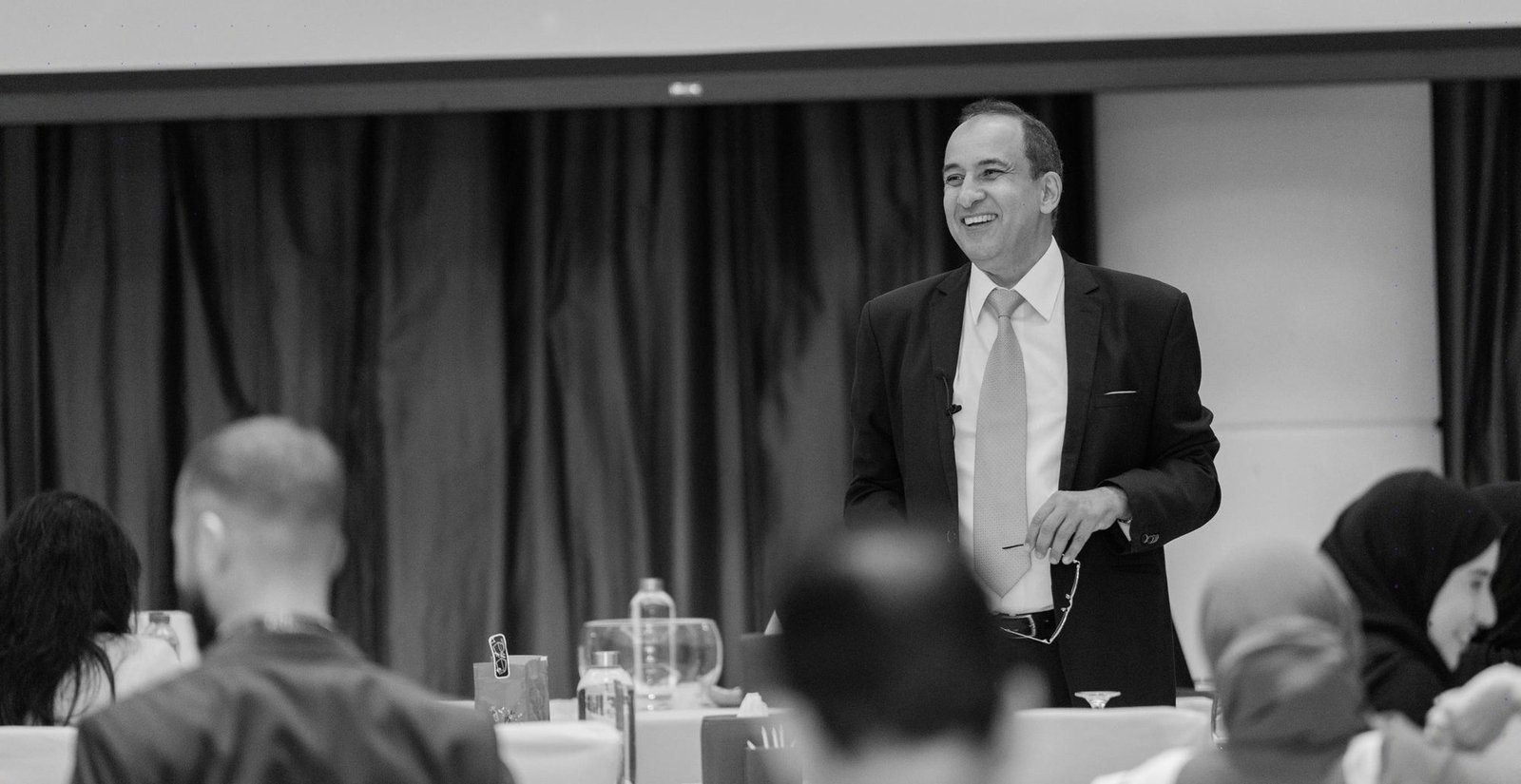
The point is not to make participants either enthusiastic about AI or suspicious of it. The point is to make them better judges of what AI gives them. That is a much more useful capability.
Design for transfer, not applause
There is another lesson embedded in the workshop design that deserves more attention.
Executive learning should not end with inspiration. It should end with movement.
That is why the workshop concluded with practical outputs and toolkits that participants could take back into their organizations. The programme included a multitude of toolkits containing a large variety of practical tools, covering areas from strategy and critical positions to talent assessment, succession, continuity, development, career architecture, mobility, and retention. The Decision and Action Log and 9-Box Guide, for example, were directly connected to the calibration work conducted in the executive case.
This is not about giving participants more worksheets. It is about reducing the distance between learning and application. If someone leaves an executive programme inspired but has no idea what to do differently in the workplace, the learning has stopped too early.
If they leave knowing which decision they need to revisit, what evidence they need to collect, which stakeholder they need to involve, which assumption they need to challenge, and which tool can help them do it, the learning has a chance of surviving beyond the workshop.
That is transfer. And transfer is ultimately where executive learning proves its worth.
The real product is not the workshop!
This brings me back to the very beginning of the article. The workshop itself is not the product! The workshop is the environment in which the product is created.
The real product is what participants become capable of doing differently afterwards.
That may sound obvious, but it has significant implications for how we design executive education. It means:
- We should spend less time asking how much content we can fit into a day and more time asking which decisions participants need to practise.
- Case studies should not merely illustrate theory. They should create genuine choices.
- Frameworks should not be presented as intellectual artefacts. Participants should use them to produce something.
- Technology should not be demonstrated for its own sake. It should be embedded in the decisions it is intended to improve.
- Governance should not arrive as the final slide after everyone has become excited about what AI can do. It should be present at the moment the decision is being made.
Most importantly, it means that the facilitator’s success cannot be judged solely by what happens in the room!
A highly engaged room can still produce very little transfer.
A quieter room, in which leaders seriously reconsider how they make decisions, may produce far more. The distinction is between engagement and transformation. Engagement is visible. Transformation is what happens afterwards.
From knowledge transfer to decision transformation
This is why I have come to believe that executive learning needs a different centre of gravity.
We have spent years asking how to transfer knowledge more effectively. We now have technologies capable of making information almost instantly available, personalized, searchable, summarized, translated, challenged, and generated. The scarcity is no longer information. The scarcity is becoming judgement!
The executive learning experience of the future therefore needs to help leaders practise what machines cannot legitimately own: framing the right problem, determining what evidence matters, recognizing what the evidence does not tell them, challenging assumptions, weighing competing consequences, exercising judgement, and accepting accountability for the decision.
That is particularly important in Human Capital because talent decisions affect careers, opportunities, organizational capability, succession, leadership pipelines, knowledge continuity, and ultimately business performance. AI can make these decisions faster, but speed is not the same as quality. A faster bad decision is simply a faster bad decision.
The alternative (opportunity) is much more interesting.
AI can help leaders see more, analyse more, test more, and work more efficiently. But the human leader still has to decide what matters, what is defensible, what is fair, what is appropriate, and what the organization is prepared to be accountable for. That is the kind of capability executive learning should be designed to strengthen.
The video accompanying this article, “Global HR Excellence Energy Summit – Conference Workshop, 2026,” captures moments from the workshop: the opening challenge, the discussions, the practical exercises, the Critical Role Radar, the executive case study, and the interaction that unfolded across the day. Those moments are useful reminders that effective executive learning does not have to choose between intellectual rigour and practical engagement. The two should reinforce each other.
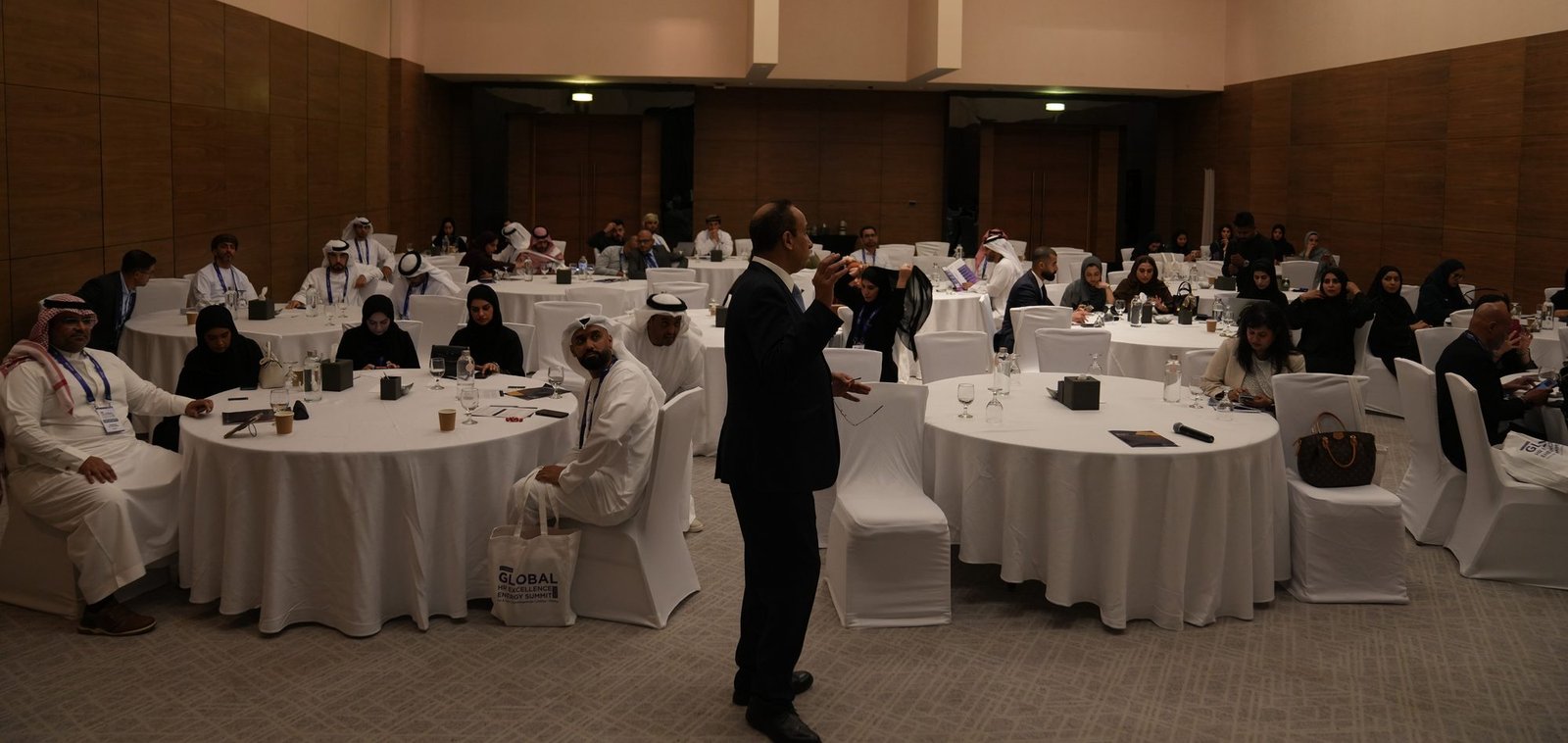 Video · YouTubeGlobal HR Excellence Energy Summit 2026: the conference workshop
The more important story, however, is what sits behind those visible moments.
Every exercise was there for a reason. Every transition was intended to move the thinking forward. Every tool was designed to bring the abstract closer to a real organizational decision. And AI was deliberately positioned not as the destination, but as one component of a larger system for building organizational capability and resilience.
That, ultimately, is how I think we should approach executive learning. Not as an opportunity to put more information into leaders’ heads, but as an opportunity to strengthen what happens when they have to use their judgement.
Because the true measure of executive education is not what participants know when they leave the room. It is the quality of the decisions they make long after they have left it.
First published on LinkedIn.